"I don't want this person in my CRM until I know they're real."
I hear some version of that on calls all the time. It's a fair instinct. It just comes from the way most CRMs are built.
Most CRMs (and every spreadsheet) have one big list called Contacts, and everyone you've ever emailed goes in it. So it fills up with people who ghosted you, people who were never a fit and people you've never actually talked to. Of course you don't want to add more.
The fix is a CRM that keeps leads separate from everything else. Then a lead becomes a deal at one specific moment - when a sales call is booked. Here's how that works and why the timing matters so much.
What's the Difference between a Lead and a Deal?
A lead is someone you believe you could do business with but haven't yet. Maybe they reached out to you, maybe you reached out to them. Either way, there's no relationship yet, and you're trying to get a sales call booked to see if they're qualified. The money is still on their side of the table.
A deal is money on the table. It's a real opportunity. Not a guaranteed one, but real. It starts the moment a sales call gets scheduled, and from there it moves through the call, your price, a contract and (hopefully) a verbal yes.
Those are two different jobs:
Leads are business development. Success is how many sales calls and deals your lead follow-up creates.
Deals are sales development. Success is how many deals turn into paying clients.
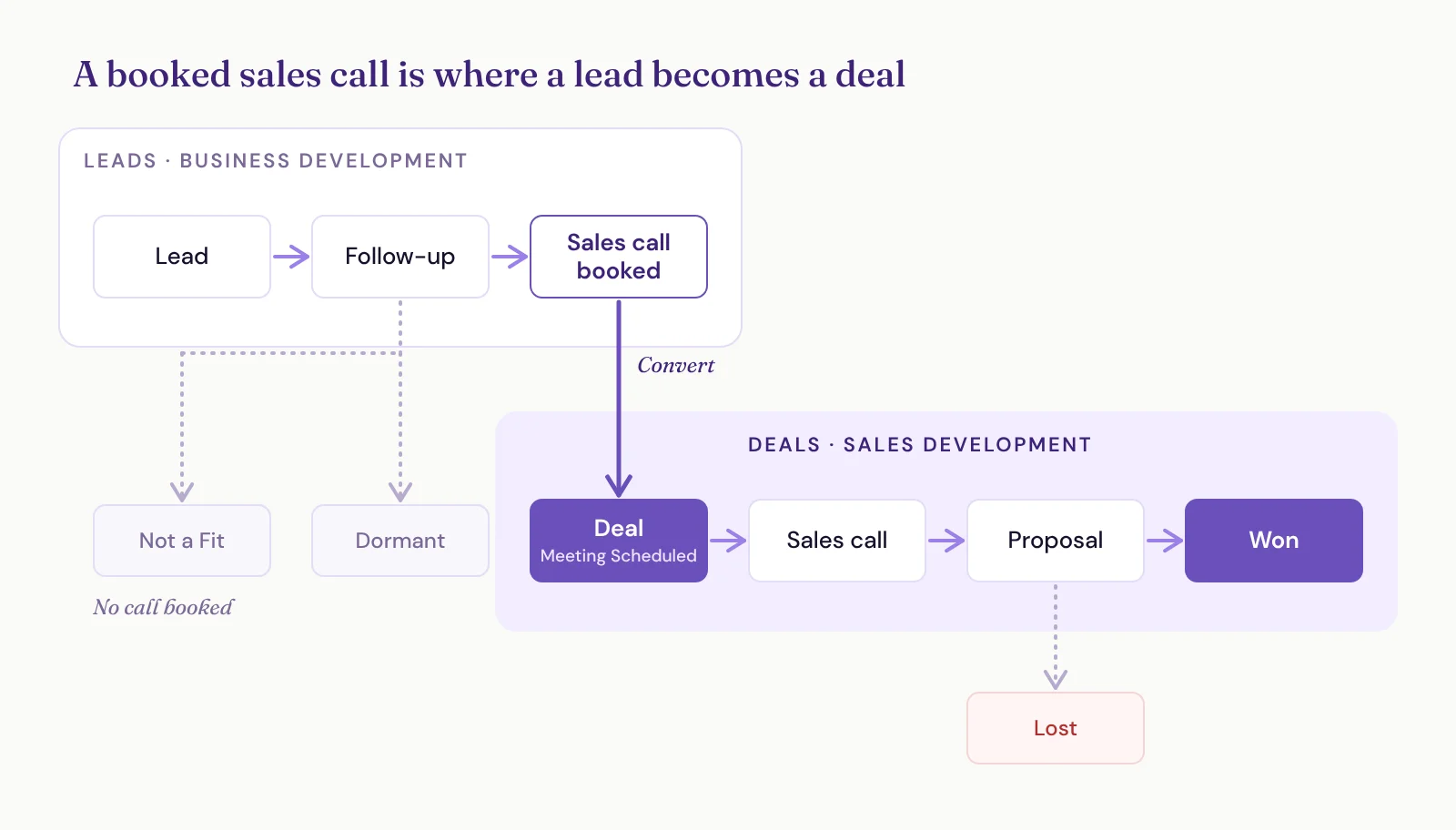
In the CRMs we build, leads live on an island. Accounts, contacts and deals are all linked to each other. An account is a company, and it can have many contacts and many deals. Leads aren't linked to any of it, and that's on purpose.
It means you can put every business inquiry into your CRM without diluting anything. Most leads won't go anywhere. They'll ghost you, they'll be bad timing, they won't be a fit. That's normal, especially with outbound leads. Because they sit in their own bucket, your contacts stay what they should be - people who have at least booked a sales call with you.
If you want the bigger picture, this is one handoff in the five stages every expert business runs on. It also assumes the person is actually a lead and not a subscriber, which I cover in why newsletter subscribers don't belong in your CRM.
When Should You Convert a Lead into a Deal?
Convert when a sales call is booked and everyone involved knows it's a sales call.
That second part matters. A virtual coffee to get to know each other isn't a sales call. Neither is a networking chat where you're secretly hoping it turns into a pitch. A real discovery call, where they booked time to talk about working with you, is.
Once that call is on the calendar, there's money on the table. It doesn't matter yet whether they'll buy. The deal exists because the conversation about money is going to happen.
Getting a lead to that point is its own skill, and I lay out exactly when to follow up on an inquiry in another post.
What Happens When You Convert a Lead?
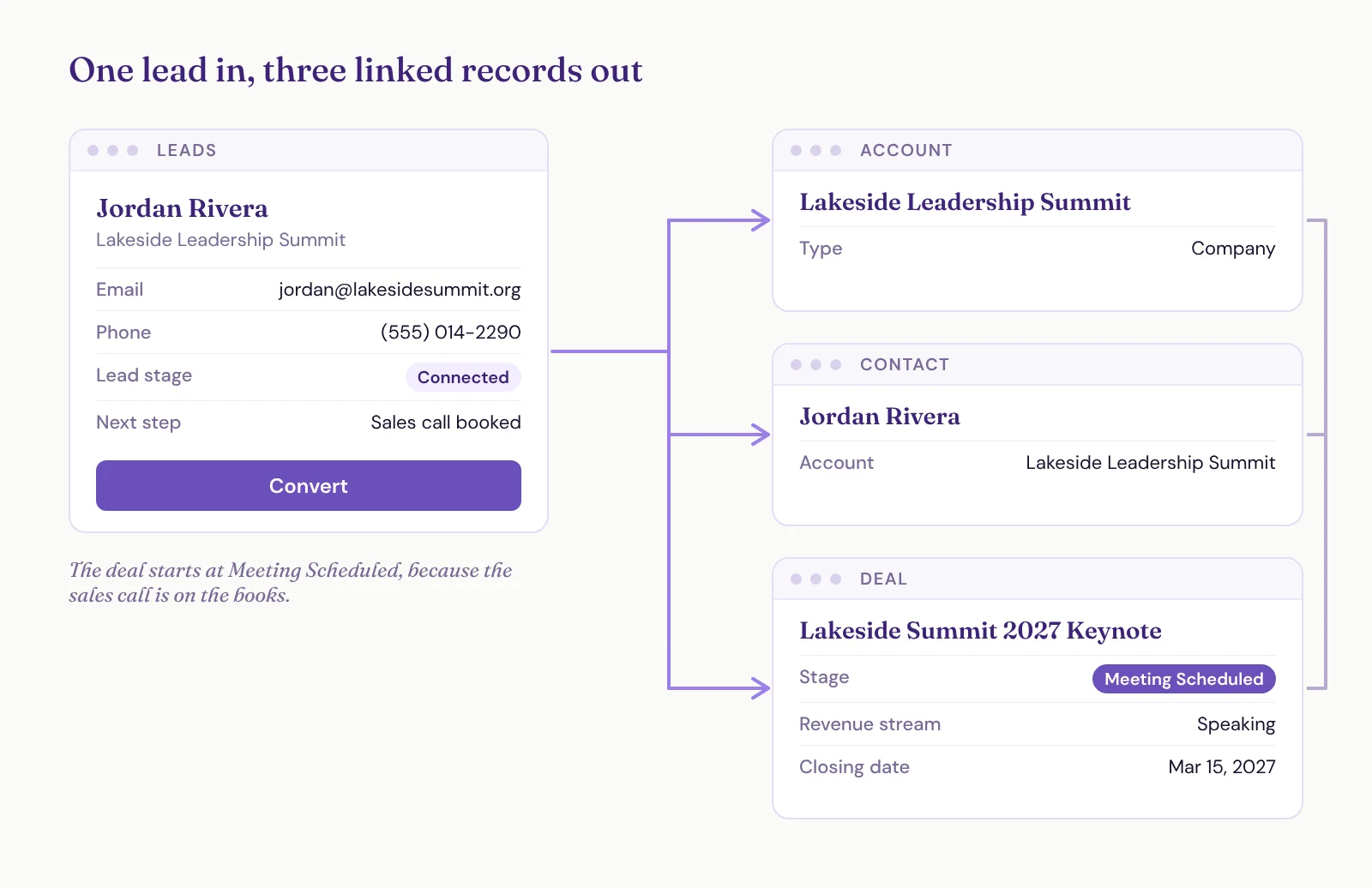
Converting is one button, and it does three things at once:
Whatever's in the lead's company field becomes the account.
The name, email, phone number and so on become the contact.
The CRM asks if you want to create a deal. Say yes.
Everything gets linked up automatically. The deal usually lands in Meeting Scheduled, since there's now a sales call on the books. Fill in what you know so far: which revenue stream it is (speaking, coaching, consulting), a best-guess closing date and anything else worth remembering.
If the person already exists as a contact, say from years ago, the CRM catches it when you convert. Add the deal to their existing contact and account instead of creating duplicates.
And the leads that never get there? Don't delete them. Close them out with a stage like Not a Fit and add a note on why. Two years from now, when the same person emails you again, your CRM flags the duplicate and you'll know exactly what happened last time.
Why Converting at the Right Moment Keeps Your Numbers Honest
When conversion happens at the same moment every time, you can answer two questions. How good am I at turning leads into sales calls? And how good am I at turning sales calls into clients?
Get the timing wrong and both numbers lie to you.
Convert too early, and every inquiry, application and RFP becomes a deal. Most of them were never going to buy, so your close rate looks way worse than it actually is.
Convert too late, and real opportunities hide in your lead list. You can't forecast revenue you can't see.
Either way, you can end up down a rabbit hole trying to fix a sales problem that doesn't exist.
Your lead data earns its keep too. Track how many leads aren't qualified, why not and where they came from, and you'll know which sources are worth your time. What happens after a lead converts is a different story, and I break down where speakers lose deals after the first conversation in its own post.
Tricky Cases: RFPs, Past Clients and People Who Just Buy
A few situations come up on almost every client call.
A past client wants to work with you again. They're not a lead. Leads are only for people you haven't done business with. Create a new deal on their existing contact and account.
Someone buys without ever talking to you. A course, a book, a paid download. They gave you money, which makes them more qualified than any lead. Create a deal and a contact (and an account if it makes sense) so the revenue is tied to them.
You submitted a proposal to a public RFP. Still a lead until a meeting is scheduled. Same goes for an event inquiry from a generic info@ address. In both cases, find an actual person to reach out to. An RFP with no human attached is just paperwork.
Leads are people you're trying to get on a call. Deals are calls with money on the table. Keep those two buckets separate and convert at the booked call, and your numbers will finally tell you the truth.