Most speakers lose deals after the buyer was already interested enough to get on a call with them.
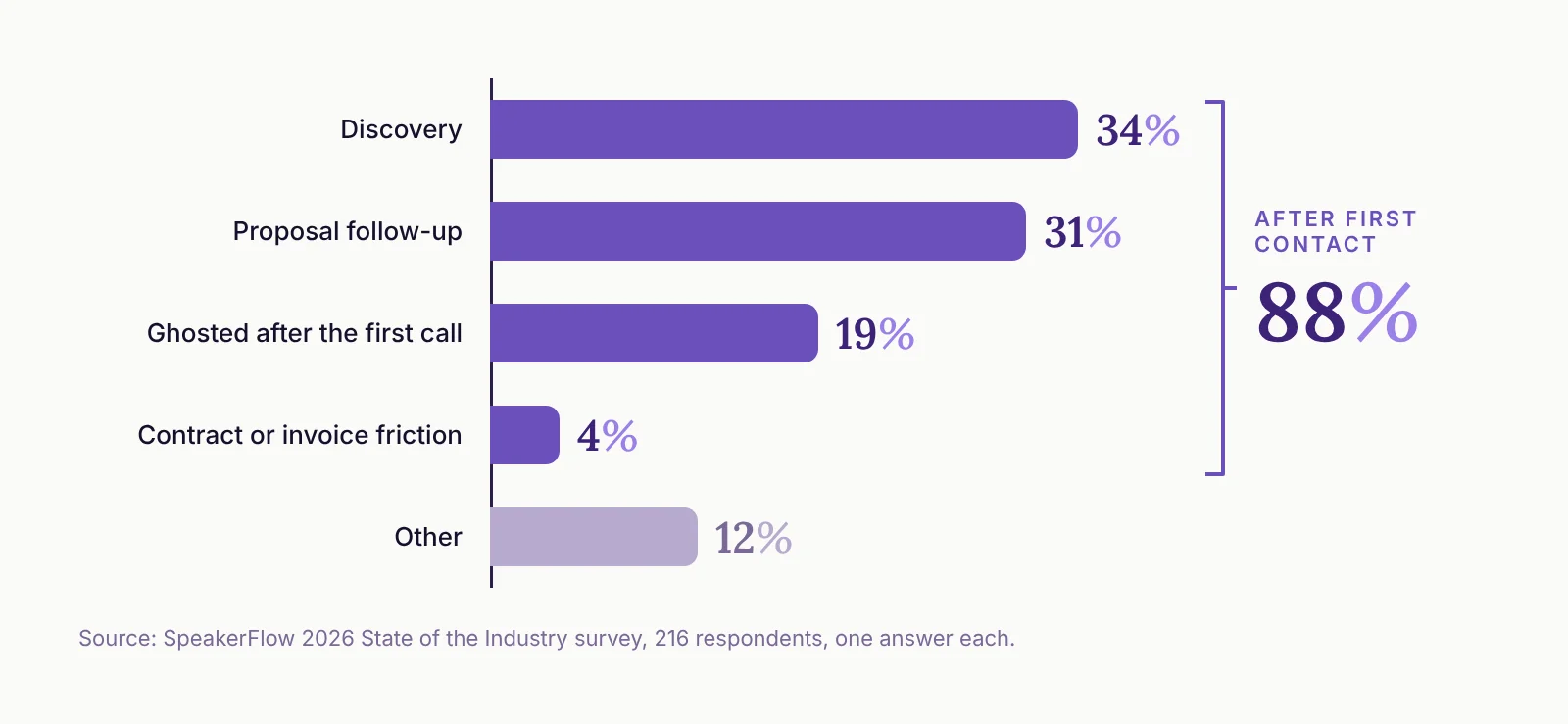
For our 2026 State of the Industry report, we asked 216 speakers, coaches and consultants where in their sales process they lose the most deals. Everyone picked one answer.
34% said initial discovery, getting to the full "yes."
31% said proposal follow-up.
19% said the prospect ghosts after the first call.
4% said contract and invoice friction.
The other 12% wrote in their own answer or skipped it.
Look at that list again. Every one of those stages happens after you've already talked to the buyer. Discovery and proposal follow-up alone are 65% of respondents. Count all four and it's 88%.
So the buyer showed up. There was money on the table. Then something slipped.
So Where Am I Losing Deals?
When someone asks me that, it's a bit like asking a doctor "why don't I feel good?" There are a bunch of other questions to answer first, and every business is a little different.
I'll level with you, though. 99% of the time it comes down to one thing. You're not taking control of the next step after the first conversation.
In sales training, the goal of every call is to book the next meeting. That's how you get an answer either way. If they book it and later cancel, they'll usually tell you why: "we're not moving forward" or "we went a different direction." That's a real answer. You can close the deal out and move on.
When the call ends with "sounds great, I'll get back to you," you've handed the next step to the buyer. Most people then wait. There's no task to check in, no date, nothing. The deal sits there until the buyer comes back around, and plenty of them never do.
It came up on our podcast years ago, and it's still true: hope is what kills sales. In sales, the person who stays top of mind wins.
Set the Agenda, Then Book the Next Call
Booking the next meeting starts at the top of the first one. Go in with some authority and set the agenda. Here's roughly how I'd open a call with an event organizer:
"I'm really excited to chat about your event. I did a little research and it looks really cool. Mind if I go over a quick agenda? First, I've got a few questions to make sure I'm the right fit. If I'm not, I'll be transparent about that, and I've got plenty of referrals I can send your way. Of course, I want to answer any of your questions. Then, if things are making sense, we'll book our next conversation so we're heading in the right direction."
Once they've said yes to that agenda, booking the next call at the end isn't awkward. It's the plan you both agreed to. Simply booking the next meeting means fewer people ghost you.
Then show them you're on top of things. The stretch right after a first call is when you build trust, so:
Send a professional recap email after the meeting.
Set a follow-up task for a week later, even if the next meeting's already on the books.
The day before the next meeting, send a quick note. "Really looking forward to chatting tomorrow. See you soon."
None of that is hard. It shows the buyer how organized you are, and that stands out against everyone else they're talking to.
What If They Won't Book the Next Call?
Sometimes they can't commit yet. There's a committee, or the budget isn't set. Fine. The rule then is to follow up within whatever time frame makes sense for their decision process.
You don't have to guess at that time frame. Ask them.
"When would it make sense for me to check in with you about this? I don't want either of us to let this slip through the cracks."
Then put a follow-up task in your CRM for that date, with the context of what they told you.
That context matters more than people think. A keynote speaker and coach we worked with got this reply from an event organizer: "We will keep your information on hand as we begin our search for speakers." The organizer was still working out details for their next live event. She knew right away it "could just get lost." Her safety net was a calendar entry, and she admitted she'd missed those before.
Nobody said no in that exchange. That's exactly how deals die after the first conversation. Without a follow-up task that carries the context of what the organizer said, and the habit of actually working your tasks, it slips through the cracks.
A Task Won't Save You without the Habit
People like to debate whether that check-in should be a calendar reminder or a task in a CRM. I'd pick the CRM task every time. But if you don't have the habit of maintaining your follow-ups in the first place, a task or a calendar reminder is pointless.
The habits come first. I wrote about the ones that matter most, and they're the same reason so many people buy a CRM and still live in spreadsheets.
Never Send a Proposal without the Review Call Booked
Not everyone sends proposals. Plenty of speakers propose on the first call. "It's ten grand to work with me. What do you say?" If that's you, everything above applies.
If you do send proposals, there's usually a call before one goes out. On that call, say something like "I'm going to send you a proposal. On our next call we'll review it together and I'll answer any questions." Then schedule that call right there, before you hang up.
By the time the proposal lands in their inbox, the meeting to review it should already be on the books. The proposal that goes out with no next step attached is the one behind a write-in we saw in the survey: "They disappear after I sent the proposal."
If it still goes quiet after that, keep following up. How often depends on the client. In a perfect world, you ask them when's the best time to follow up.
My default is a week. Send the proposal, follow up a week later, wait another week and follow up again, then wait another week and do it once more. If I'm on touch point four, they're ghosting me and I still haven't been able to chat with them, I'll send something like "Should I just close the file out at this point?"
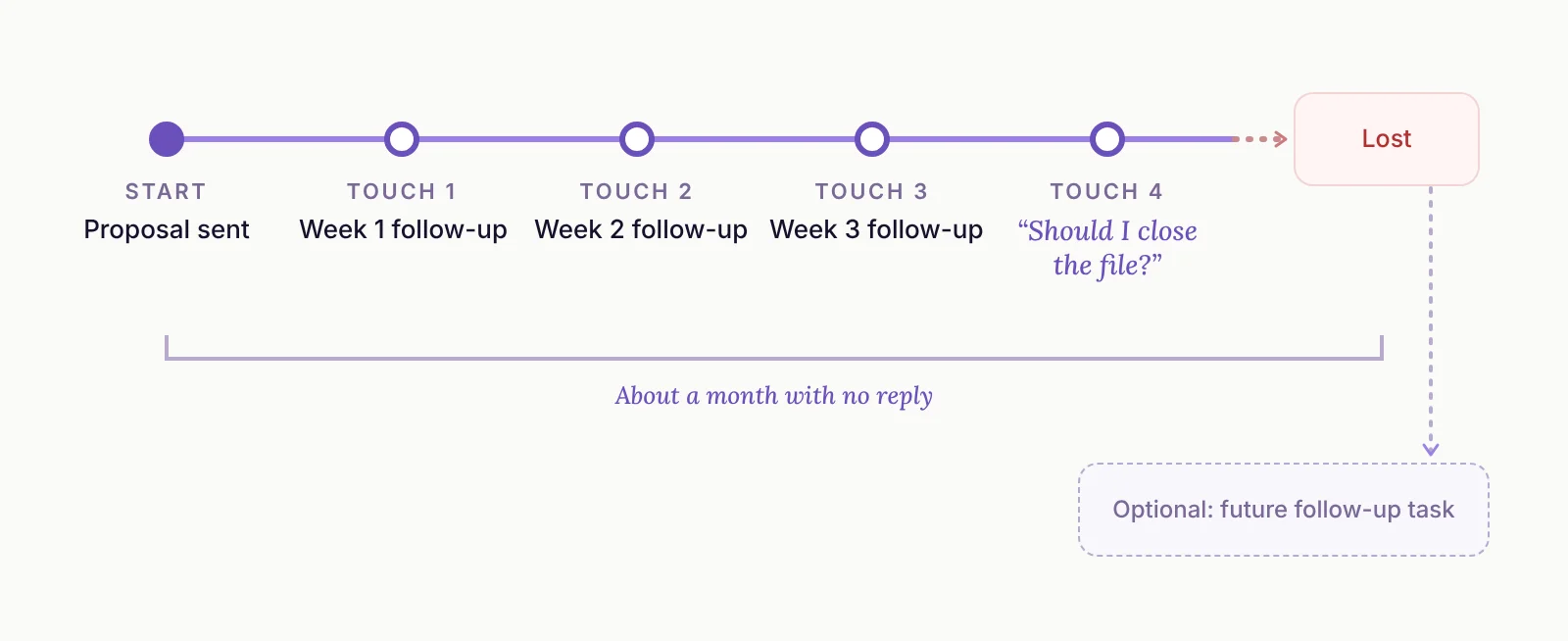
If it's been a month and still nothing, the deal moves to Lost. Optionally, set a follow-up task to check back in down the road.
Why More Leads Won't Fix It
A lot of survey write-ins blamed lead volume. "The problem is the pipeline." What's actually going wrong depends on which side of the first conversation you're on, and in the CRMs we build, we keep those two sides separate.
Business development is everything before the sales call. You're working leads, people you think you could do business with, either cold or because they came in through a form. The goal is to book a call. Most of the time the problem here is simple. People don't follow up. A contact form comes in, they send one email and wait. They don't pick up the phone, connect on LinkedIn or send a short personal video.
Sales development starts once the call is booked. Now there's money on the table, so the lead becomes a deal. The problem here is the one I covered above: no next call scheduled, weak follow-up, waiting on the buyer to get back to you. It's very passive. A lot of owners say "if I can just get on the call, I'll close them," and to be fair, owner-led businesses usually close pretty well once they're on the call. Getting from that call to a signed deal is where it falls apart.
If you're not following up and making the most of every person who enters your world, more leads is like pouring more water into a leaky bucket.
The day-by-day schedule for following up on a new inquiry before the call is its own post: How Many Times Should You Follow Up on a Speaking Inquiry? A 17-Day Plan.
Not All Ghosting Is the Same
Ghosting happens on both sides of that line, and it helps to know which kind you've got.
In business development, we used to split ghosted leads into two buckets. "Never responded" is someone you never actually got in touch with, like a contact form submission or a cold lead who never replied. "Gone fishing" is someone you did have contact with, back and forth over email, LinkedIn or phone, who then went quiet. Gone fishing should get higher priority, since you already had a conversation going.
In practice, most CRM users didn't keep those straight. So for a lot of clients, I just call it dormant now. One dormant stage, and you filter by who has replied to an email to get close to the real number.
In sales development, ghosting looks different. You've already run the sales call. You follow up, you follow up again, and you lose the deal to lack of response.
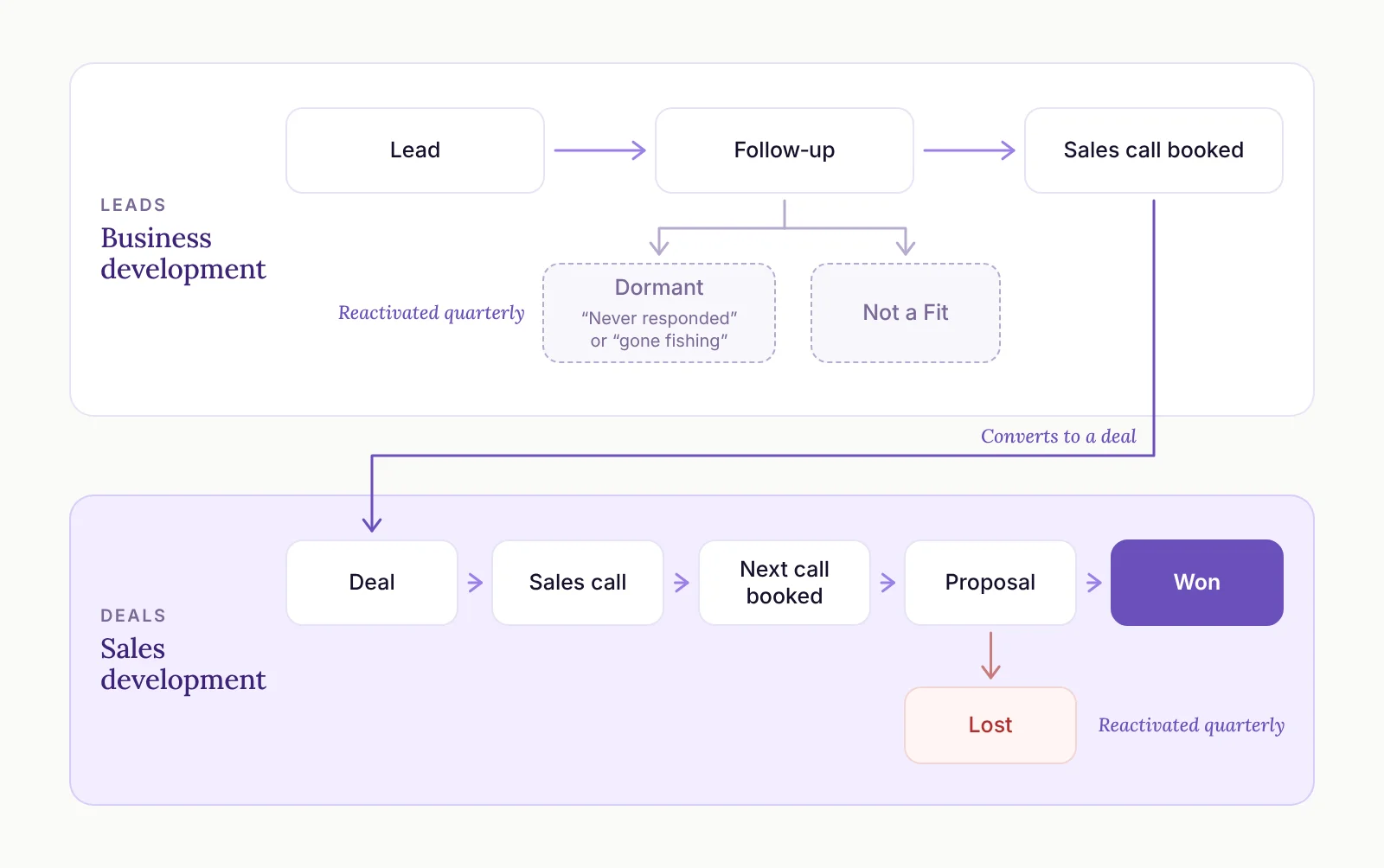
Those dormant leads and lost deals still have value. Every quarter at SpeakerFlow, we run something we call the Reactivator. We take our low-level leads and lost deals, anyone who ghosted us, went dormant or we lost, and send out a promotion of some kind to try to reactivate them. Every quarter it turns into more money, and it keeps us in touch with people we'd otherwise never hear from again.
"I Don't Want to Be Pushy"
Fair. I get it. But have you ever actually been told you're pushy?
Let's get to that point first. Then we can look at the situation and figure out whether you really were.
Most people think pushy means too many touches. It's really about the phrasing. "Hey, are we gonna do this?" sent three times in a row is pushy. Dripping out valuable content, or showing them something useful, isn't. If you don't go in intending to be pushy, chances are you won't be. There's a good podcast conversation on making every touchpoint add value before the sale if you want ideas for what to send.
People need to be followed up with. Follow up until you get a no, or until five or six emails and other touches have gone unanswered. For comparison, the median person in our survey gives up after three.
Three is where most of these deals go to die. Book the next call, and keep following up until you get your answer.